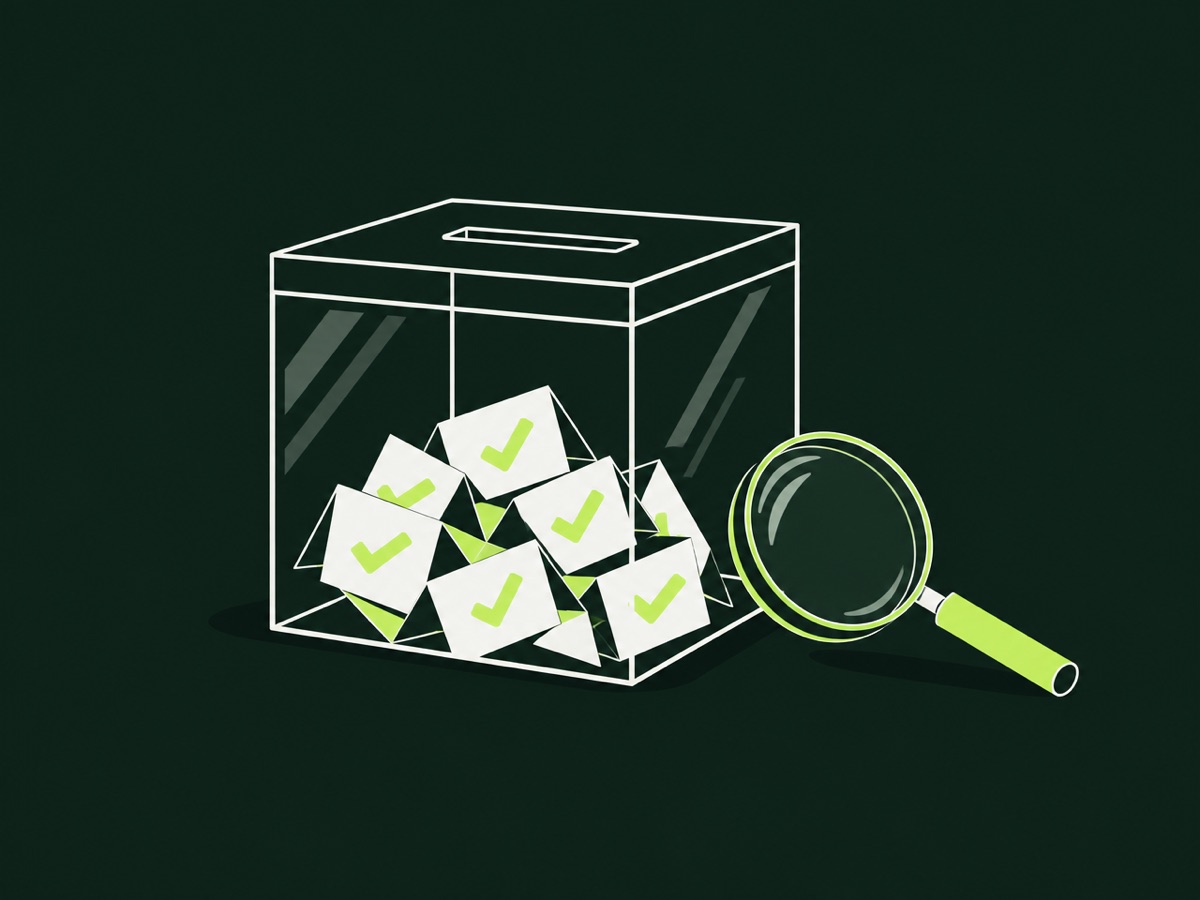
The race to the result
On the night of an election, the pressure is almost always about speed. Citizens want results, media want them sooner, and officials feel the weight of both. Technology is often introduced with a promise to deliver results faster. That promise is easy to make and easy to measure.
It is also the wrong thing to optimise first. An election is not a computation whose value is the answer. It is a process whose value is that the losing side can accept the answer. That depends on trust, and trust depends on being able to check.
What speed cannot buy
A fast result that people doubt is worse than a slower one they believe. Doubt is costly: it fuels disputes, litigation and sometimes unrest, and it lingers long after the count is finished.
Technology can make errors faster and less visible too. A paper count has a human scale: observers stand in a room and watch ballots being sorted. A digital system can fail silently, in software that few people can inspect, and a single flaw can affect many results at once. Speed amplifies whichever way a system fails.
So the design question is not how quickly can we count, but how can everyone with a legitimate interest verify that the count is right.
Properties worth designing for
This is a discussion about design, not about any party or candidate. A few properties recur in serious thinking about voting systems.
- Verifiability. Can a voter, an observer or an auditor confirm that votes were recorded and counted as cast? Systems that leave a durable, voter checked record, such as a paper trail, make independent checks possible.
- Auditability. Can results be checked after the fact against independent evidence? Post election audits, where a sample of paper records is compared with electronic totals, are one widely used method.
- Transparency of results. Publishing results at polling unit level lets anyone add them up and compare with the total. Aggregated numbers alone ask people to take the centre's word.
- Secrecy. Voters must be able to cast ballots privately, and nobody should be able to prove how someone voted. This sits in tension with verifiability, and good designs manage the tension carefully.
- Resilience. Power, connectivity and logistics fail. A system that works only in perfect conditions will not survive election day.
- Access. Voters with disabilities, limited literacy or no technical experience must be able to use it unaided.
Where technology helps
None of this is an argument against technology. Electronic tools can reduce clerical errors in compiling results, help manage voter registers, speed up logistics and publish detailed results to the public in open formats. Digital transmission of results from polling units can be paired with the original signed paper forms, so that each backs up the other.
The pattern that holds up is technology as an aid to a process that stays checkable, rather than technology as a replacement for checks.
Consider a hypothetical country that moves results transmission online. If every polling unit result sheet is also photographed and published, citizens and observers can compare the digital figure with the signed paper. A mismatch becomes visible and fixable. Without that, a mismatch becomes a rumour.
Timing matters as well. Rules about when results are final, how disputes are heard and what evidence is kept should be settled well before the vote. Designing them on the night, under pressure, is how suspicion grows.
Open processes beat clever ones
Transparency is not only about results. It extends to how systems are procured, tested and certified. Independent testing, published procedures, public demonstrations and access for accredited observers all give people reasons to believe the machinery. Where software is concerned, independent review of how it works builds more confidence than assurances from the vendor.
Complexity is itself a risk. Every added layer is another place for something to go wrong and another thing observers must understand. A simpler process that people grasp can be more trustworthy than a sophisticated one they must take on faith.
Public understanding is part of the design too. If citizens cannot explain, in a sentence or two, how their vote becomes a number on a screen, suspicion has room to grow. Civic education before polling day, plain language guides and open demonstrations of the equipment cost little next to the price of a disputed result.
A fair test
When evaluating any election technology, ask whether a sceptical but reasonable person, with no stake in the outcome, could check the result without trusting the people who produced it. If so, speed is a welcome bonus. If not, speed is just a faster way to lose confidence.